
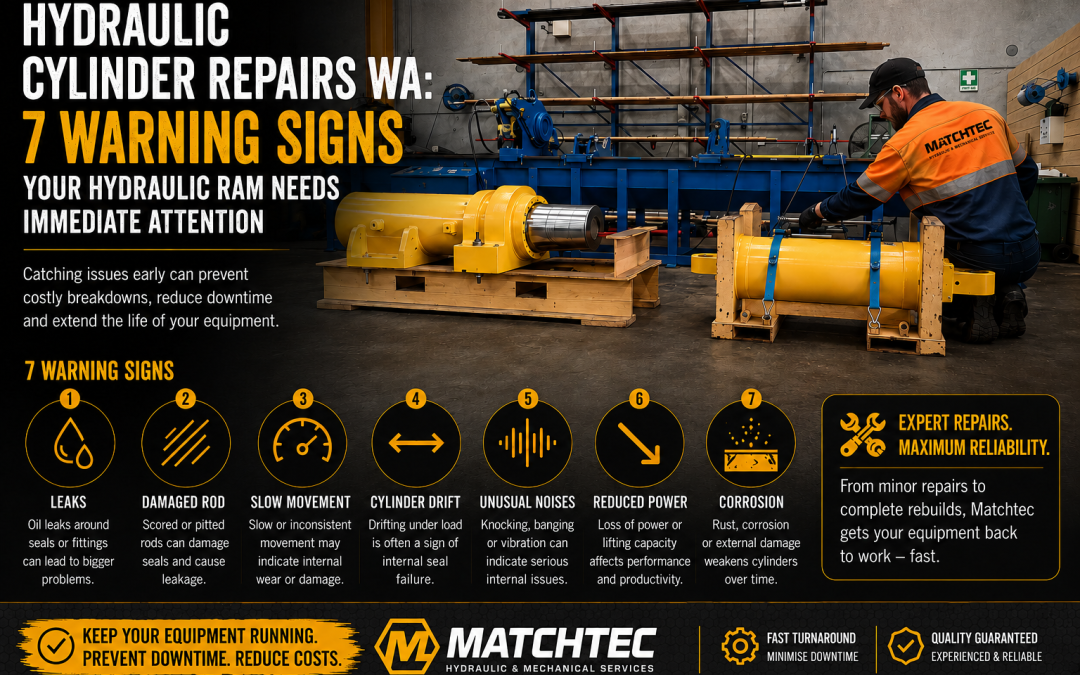
Hydraulic cylinders are critical components in a wide range of equipment used throughout Western Australia. From mining machinery and earthmoving equipment to agricultural machinery, trucks, cranes, and industrial plant, hydraulic cylinders provide the force needed to perform demanding tasks every day.
Because hydraulic cylinders often operate under extreme pressure and harsh environmental conditions, wear and damage can develop over time. Unfortunately, many operators overlook the early warning signs until a minor issue becomes a major failure.
Recognising the warning signs early can help reduce downtime, prevent expensive repairs, and extend the life of your equipment.
Why Hydraulic Cylinder Problems Should Never Be Ignored
A hydraulic cylinder may appear to be a simple component, but it operates within a complex hydraulic system.
When a cylinder begins to fail, it can affect:
- Equipment performance
- Productivity
- Hydraulic system efficiency
- Workplace safety
- Operating costs
Addressing problems early often results in significantly lower repair costs than waiting until a complete failure.
Hydraulic Oil Leaks Around the Cylinder
One of the most obvious warning signs is visible hydraulic oil leakage.
Leaks commonly occur around:
- Rod seals
- Gland seals
- End caps
- Hydraulic fittings
Even small leaks should not be ignored.
Loss of hydraulic oil can reduce system performance while introducing contaminants into the system.
If left unresolved, seal damage can quickly escalate into more significant internal cylinder wear.
Scored or Damaged Cylinder Rods
The hydraulic rod is one of the most critical components of the cylinder.
Inspect the rod for:
- Scratches
- Pitting
- Corrosion
- Impact damage
- Surface wear
A damaged rod can destroy seals, create leaks, and accelerate internal wear.
Early repairs may prevent the need for complete cylinder replacement.
Slow or Inconsistent Cylinder Movement
Hydraulic cylinders should operate smoothly and consistently.
If movement becomes:
- Slower than normal
- Jerky
- Unresponsive
- Inconsistent
it may indicate internal wear or hydraulic system issues.
Common causes include:
- Worn seals
- Internal leakage
- Contaminated hydraulic oil
- Damaged cylinder components
Professional inspection can identify the root cause before further damage occurs.
Excessive Cylinder Drift
Cylinder drift occurs when a cylinder slowly moves while under load, even though controls are not being operated.
This is often a sign of:
- Internal seal failure
- Piston seal damage
- Internal bypass leakage
Excessive drift reduces performance and may create safety concerns, particularly on lifting equipment.
Unusual Noises During Operation
Hydraulic systems should operate relatively smoothly.
Warning signs include:
- Knocking noises
- Banging sounds
- Chattering
- Excessive vibration
These symptoms may indicate:
- Air contamination
- Internal component damage
- Loose components
- Pressure issues
Ignoring unusual noises often leads to larger mechanical failures.
Reduced Lifting or Holding Capacity
If equipment struggles to maintain load pressure or lifting performance has declined, the hydraulic cylinder may be losing efficiency.
Possible causes include:
- Internal seal wear
- Cylinder scoring
- Pressure loss
- Hydraulic fluid contamination
Reduced performance often develops gradually, making it important to monitor equipment behaviour over time.
Visible Corrosion or Physical Damage
Western Australian equipment often operates in demanding environments that expose hydraulic cylinders to:
- Dust
- Mud
- Water
- Salt exposure
- Impact damage
Corrosion and external damage can significantly reduce cylinder life and increase the likelihood of seal failure.
Regular inspections help identify problems before they become major repairs.
Common Causes of Hydraulic Cylinder Failure
Understanding what causes hydraulic cylinder damage can help operators reduce failures.
Common causes include:
Contaminated Hydraulic Oil
Dirt and debris can damage seals and internal surfaces.
Lack of Preventive Maintenance
Routine inspections help identify wear before failure occurs.
Seal Wear
Seals naturally deteriorate over time and require replacement.
Overloading Equipment
Exceeding design limits places excessive stress on cylinders and hydraulic systems.
Environmental Conditions
Harsh operating environments accelerate wear and corrosion.
The Benefits of Early Hydraulic Cylinder Repairs
Repairing a cylinder early often delivers significant advantages.
Benefits include:
- Reduced downtime
- Lower repair costs
- Improved equipment reliability
- Longer cylinder life
- Better hydraulic system performance
- Increased workplace safety
Many cylinders can be successfully rebuilt if damage is identified before major component failure occurs.
When Should a Hydraulic Cylinder Be Rebuilt?
In many situations, rebuilding a hydraulic cylinder is more cost-effective than replacement.
A rebuild may include:
- Seal replacement
- Rod repairs
- Honing cylinder barrels
- Replacing wear bands
- Component inspection and testing
An experienced hydraulic specialist can determine whether repair, rebuild, or replacement is the most suitable option.
FAQ
What are the warning signs that a hydraulic cylinder needs repair?
Common warning signs include hydraulic oil leaks, damaged rods, slow operation, cylinder drift, unusual noises, reduced lifting capacity, and visible corrosion. Early repairs help prevent costly breakdowns and extend equipment life.
Conclusion
Hydraulic cylinders play a vital role in the performance of heavy equipment throughout Western Australia.
Recognising early warning signs such as leaks, drift, reduced performance, and rod damage can help operators avoid expensive failures and minimise downtime.
Whether operating mining equipment, earthmoving machinery, agricultural equipment, or industrial plant, proactive hydraulic cylinder maintenance remains one of the most effective ways to improve reliability and reduce long-term operating costs.
FAQ
What causes hydraulic cylinders to leak?
Hydraulic cylinders commonly leak due to worn seals, damaged rods, excessive pressure, contamination, or normal wear and tear.
Can a hydraulic cylinder be repaired?
Yes. Many hydraulic cylinders can be repaired or rebuilt depending on the extent of the damage.
How often should hydraulic cylinders be inspected?
Hydraulic cylinders should be inspected regularly as part of routine equipment maintenance programs.
What is cylinder drift?
Cylinder drift occurs when a hydraulic cylinder slowly moves while under load due to internal leakage or seal failure.
Is it better to rebuild or replace a hydraulic cylinder?
In many cases, rebuilding is more cost-effective if the cylinder components remain structurally sound.
What industries commonly use hydraulic cylinders?
Hydraulic cylinders are widely used in mining, construction, agriculture, transport, manufacturing, marine, and industrial applications.
Can damaged hydraulic rods be repaired?
Yes. Depending on the severity of the damage, rods can often be repaired, re-chromed, or replaced as part of a cylinder rebuild.
We would be happy to help. For any assistance with your hydraulic cylinder repairs and refurbishment, please call us on 0893032956.
