
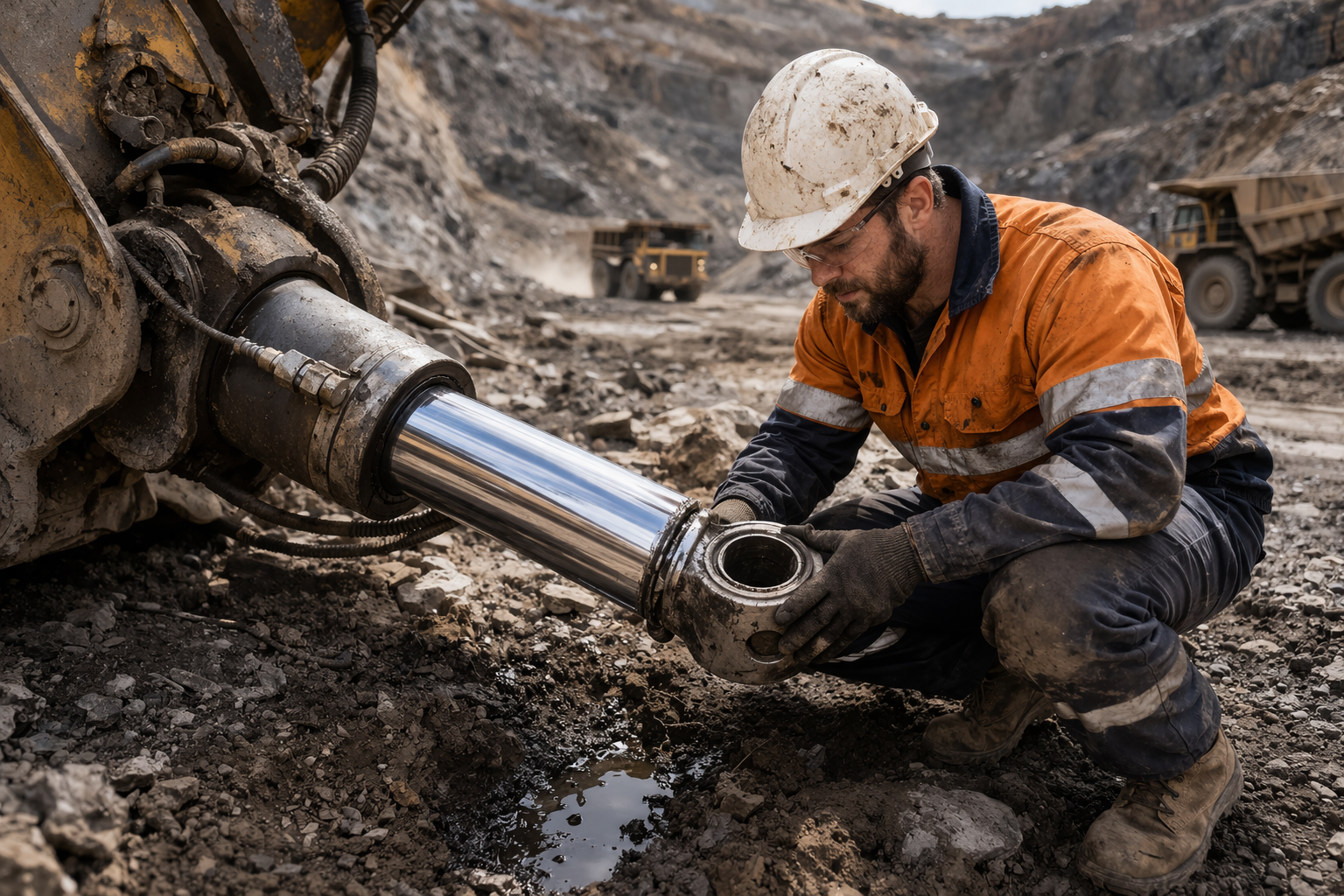
Hydraulic cylinder failure causes can often be traced back to contamination, worn seals, misalignment, overheating, or excessive pressure. When a hydraulic cylinder fails, it can lead to fluid leaks, reduced machine performance, costly repairs, and unexpected downtime. Knowing the most common causes of failure and taking preventative action can help extend equipment life and keep your hydraulic system operating efficiently.
Why Do Hydraulic Cylinders Fail?
Hydraulic cylinders work in demanding environments and under high pressure. Over time, normal wear, harsh operating conditions, poor maintenance, and incorrect installation can damage internal components. Even a small issue, such as a minor leak or contaminated fluid, can develop into a serious failure if it is not addressed early.
Understanding the main hydraulic cylinder failure causes helps operators, maintenance teams, and business owners reduce risk and improve system reliability.
- Contaminated Hydraulic Fluid
Contaminated hydraulic fluid is one of the most common reasons a cylinder fails. Dirt, dust, metal particles, and water can enter the system and damage seals, cylinder walls, pistons, and rods. Once contamination spreads through the system, wear increases quickly.
Common contaminants include:
- Dirt and dust
- Metal shavings
- Water or moisture
- Sludge from degraded fluid
How to prevent it
- Check hydraulic fluid regularly
- Replace filters on schedule
- Keep the hydraulic system clean during servicing
- Use high-quality hydraulic fluid suitable for the system
Clean fluid is one of the most important parts of good hydraulic system maintenance.
- Seal Wear and Damage
Seals are essential for containing hydraulic pressure and preventing leaks. Over time, seals wear out due to friction, heat, pressure, and exposure to contaminants. When seals begin to fail, fluid leakage usually follows, which reduces performance and increases the chance of further damage.
Seal failure is often caused by:
- Age and general wear
- Low-quality seal materials
- Exposure to heat or chemicals
- Dirty hydraulic fluid
How to prevent it:
- Replace worn seals before they fail completely
- Use the correct seal materials for the operating environment
- Watch for early signs of leakage
If left too long, seal problems can turn a minor issue into a major hydraulic cylinder repair job.
- Excessive Pressure
Hydraulic cylinders are designed to operate within specific pressure ranges. When those limits are exceeded, internal components can become overstressed. This may result in blown seals, damaged rods, cracked cylinder barrels, or complete failure.
Excessive pressure may be caused by:
- System overload
- Faulty relief valves
- Incorrect settings
- Improper system design
How to prevent it
- Use properly functioning pressure relief valves
- Monitor system pressure consistently
- Follow manufacturer operating guidelines
- Avoid overloading equipment
Controlling pressure is a key step to prevent hydraulic failure and extend cylinder life.
- Misalignment and Side Loading
Misalignment occurs when the hydraulic cylinder is not mounted or operating in the correct position. This creates uneven stress across the rod and seals. Side loading is especially damaging because cylinders are designed to handle linear force, not sideways force.
This can lead to:
- Bent rods
- Uneven component wear
- Premature seal failure
- Reduced cylinder efficiency
How to prevent it
- Ensure the cylinder is installed correctly
- Inspect mountings and brackets regularly
- Check rod movement for smooth operation
- Avoid side loads wherever possible
Proper alignment is critical for performance and reliability.
If your hydraulic cylinder is leaking, losing pressure, or not performing properly, you can get in touch with our team to arrange an inspection or repair.
- Overheating
High operating temperatures can reduce the effectiveness of hydraulic fluid and damage seals, hoses, and internal cylinder surfaces. Overheating also speeds up fluid breakdown, increasing the risk of contamination and wear.
Overheating may be caused by:
- Continuous heavy operation
- Poor cooling system performance
- High ambient temperatures
- Incorrect hydraulic fluid
How to prevent it
- Maintain cooling systems properly
- Use hydraulic fluids designed for the operating conditions
- Monitor fluid and system temperatures
- Avoid prolonged operation beyond system limits
Keeping heat under control is an important part of long-term cylinder protection.
- Lack of Routine Maintenance
Skipping maintenance is one of the fastest ways to shorten hydraulic cylinder life. Small issues such as minor leaks, loose fittings, or dirty fluid can become much more serious when ignored.
Common maintenance mistakes include:
- Missing inspection intervals
- Ignoring warning signs
- Delaying repairs
- Using worn parts for too long
How to prevent it
- Create a regular inspection schedule
- Carry out preventative servicing
- Fix small problems early
- Keep maintenance records for each machine
Consistent maintenance reduces the chance of breakdowns and improves equipment reliability.
- Corrosion and Environmental Damage
Hydraulic cylinders often work in harsh environments where they are exposed to water, chemicals, mud, salt, and extreme weather. These conditions can corrode metal surfaces, weaken rods, and damage seals.
Environmental damage is common in areas exposed to:
- Moisture and rain
- Salt air in coastal regions
- Harsh cleaning chemicals
- Dusty or dirty job sites
How to prevent it
- Clean cylinders regularly
- Use protective coatings where needed
- Store equipment in suitable conditions
- Inspect exposed rods and surfaces for corrosion
This is particularly important for heavy equipment operating in demanding Western Australian conditions.
What Happens When a Hydraulic Cylinder Fails?
Hydraulic cylinder failure can have serious consequences for both equipment and business operations. A failed cylinder may cause:
- Unplanned equipment downtime
- Reduced machine performance
- Higher repair or replacement costs
- Safety risks for operators
- Loss of productivity
In many cases, early diagnosis and repair are much more cost-effective than waiting for a complete breakdown.
How to Extend the Life of Hydraulic Cylinders
To improve performance and reduce repair costs, it is important to follow a proactive maintenance approach.
Best practices include:
- Keep hydraulic fluid clean
- Monitor pressure and temperature
- Replace worn seals and parts early
- Avoid incorrect loading or misalignment
- Use quality replacement components
- Work with experienced hydraulic professionals
Taking these steps will help prevent hydraulic failure and reduce the risk of costly shutdowns.
Hydraulic Cylinder Repairs and Rebuilds in Western Australia
At Matchtec, we specialise in hydraulic cylinder repairs, rebuilds, and maintenance services across Western Australia. Whether your equipment has leaking seals, rod damage, pressure issues, or general wear, our team can inspect the problem and provide practical repair solutions to minimise downtime and restore performance.
If your cylinder is showing signs of wear or failure, professional assessment can help determine whether repair or rebuild is the most cost-effective option.
FAQ
What is the most common cause of hydraulic cylinder failure?
Contaminated hydraulic fluid is one of the most common hydraulic cylinder failure causes because it damages seals and internal components over time.
How can hydraulic cylinder failure be prevented?
Regular servicing, clean hydraulic fluid, proper installation, and early repairs are the best ways to prevent failure.
How often should hydraulic cylinders be serviced?
Service intervals depend on equipment type, usage, and operating conditions, but regular inspections should always be part of preventative maintenance.
Is it better to repair or replace a hydraulic cylinder?
In many situations, repair or rebuilding is more affordable than full replacement, especially when the damage is identified early.
Conclusion: Making the Smart, Evidence-Based Choice
For large suspension cylinders in Perth, refurbishment is the clear winner in the vast majority of cases.
By choosing a reputable, certified workshop, you can achieve major cost savings (30-70%), drastically reduce your machinery’s downtime, and still ensure you get a high-quality component that performs reliably. Only when a cylinder has severe structural damage should replacement be your first choice.
Ready to find out if your cylinder is repairable? Contact a local Perth specialist today to get a detailed inspection report and an accurate quote.
Frequently Asked Questions (FAQ)
Here are the quick answers to the most common questions about fixing or replacing large suspension cylinders in Perth.
Q1: Is it always cheaper to refurbish a large cylinder than to buy a new one?
A: Not always, but most of the time, yes. Refurbishment typically saves you 30% to 70% of the cost of a brand-new cylinder. However, if the cylinder has suffered severe structural damage (a cracked barrel or bent rod that can’t be repaired), the repair may be so expensive that it becomes “Beyond Economic Repair” (BER). In those rare cases, buying new is the smarter choice.
Q2: Will a repaired cylinder last as long as a brand-new one?
A: If a reputable Perth specialist does the refurbishment and follows strict quality standards, the repaired cylinder should perform very close to new. Workshops utilise high-quality techniques, including precision honing and replacing all seals with premium components. The life of the cylinder then depends heavily on the harsh conditions it operates in and how well it’s maintained afterward.
Q3: How long will my machinery be down while the cylinder is repaired?
A: The total downtime is usually much less than waiting for a new part to be shipped. Refurbishment in a specialised Perth facility generally takes 1 to 4 weeks, depending on the extent of the damage.
Q4: What is cylinder “re-chroming” and why is it important in Perth?
A: Re-chroming is the process of applying a fresh, hard layer of chrome plating to the cylinder rod. This is crucial because the chrome layer protects the steel rod from rust, corrosion, and wear—all common problems in Western Australia’s varying climate and dusty environments. A fresh chrome layer helps maintain a perfect seal and extends the cylinder’s life.
Q5: Is refurbishing better for the environment?
A: Definitely. When you choose to refurbish, you are reusing the existing steel barrel and other major components. This significantly reduces the energy needed and the waste created compared to manufacturing a brand-new cylinder from scratch. It’s an easy way for your business to meet its sustainability goals.
